Business insights from Meet Magento Netherlands 2025: Six talks on eCommerce that matter
The big Hyvä announcement made waves at Meet Magento Netherlands, but the business track was packed with valuable takeaways worth exploring.
Six speakers shared practical, battle-tested strategies for growing e-commerce businesses, from warehouse scaling to return optimisation to the dangers of hoarding your knowledge like Gollum with the ring. Here's what we learned.

No Guts, No Gold
Anne & Esther Vedder, The Golden Twins (Vedder & Vedder / Feather Women / Vedder Diamonds)
The Golden Twins brought energy, honesty, and a reality check: success is not a straight line. It's messy, non-linear, and requires perseverance that most people underestimate.
Their core lesson? The power of not giving up. Results might not appear for years. You can start at 32, fail, and still build something incredible. They should know—they've done it.
Vedder & Vedder shows what's possible when you scale smart on Magento Open Source. The twin sisters Anne and Esther started in 2016 with €10,000 and zero orders in their first two months. Today? A multi-million euro personalized jewelry business with 70 employees, 242,000 Instagram followers, and customers across Europe, with the U.S. market up next. No enterprise license needed, just solid platform choices and execution.
Their growth playbook:
Finding your passion: You know you've found it when you think about it outside work, talk about it incessantly, or lose track of time doing it. For them, it's jewellery. For you? Only you know.
Accelerate growth: How PIM makes the difference
Tomas Hesseling, Director Global Business Development at Ergonode PIM
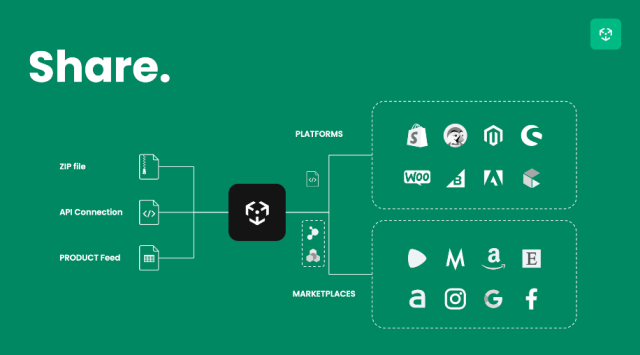
Let's start with a sobering stat: marketing teams currently spend 60-80% of their time on data management instead of actual strategic work. That's not a typo. Most of your team's energy is going into wrestling with fragmented product information across disparate systems.
Tomas made the case that Product Information Management (PIM) isn't a nice-to-have anymore—it's strategic infrastructure. PIM centralises everything: supplier data, ERP systems, marketing content, SEO, specifications, and media. The result? You go from launching products in weeks to launching them in days.
The takeaway: Stop letting your team drown in spreadsheets. PIM transforms product data from a bottleneck into a growth driver.
Five Practical Tips on return optimisation by department
Niels Bergmans, Commercial Lead for Partnerships at Returnless
Here's something most merchants would rather not think about: your return experience is make-or-break for customer loyalty. Niels shared data showing that 75-100% of consumers will make repeat purchases if the return experience is pleasant. Flip that around, and 50% will switch to a competitor if someone else handles returns better.
But returns aren't just about keeping customers happy, they're a business opportunity.
Quick win: Simply mentioning your return policy in the footer boosts conversion by 6%. Small details, big impact.
Scaling your warehouse like a Pro
Jeffta van der Woerd, Picqer
Jefta flipped the script on warehouse management: your warehouse isn't just operational infrastructure—it's the critical link between what your webshop promises and what your customer receives.
But here's the thing: processes and software won't save you. Culture determines the quality of your growth. Mistakes come from behaviour, not coincidence. And your warehouse employees? They're usually the first to spot problems.
Building a strong culture:
Operational quality: Clutter equals mistakes. Calm equals quality. Make mistakes impossible by checking products upon arrival, dedicating one product per location, and scanning everything.
The takeaway: You can't software your way out of a culture problem. Build the right environment first.
Reducing the cost of ownership in eCommerce
Jakub Winkler, Prime Sorcerer at Qoliber, our Gold Partner
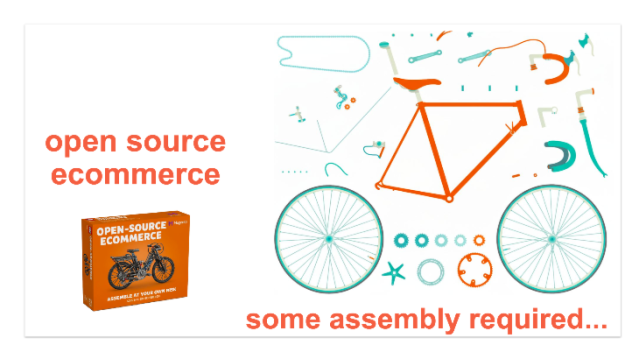
Jakub used a brilliant analogy: open-source e-commerce is like riding a bike that requires "some assembly." The more complex your bike, the more expensive it is to maintain and the harder it is to find someone who can fix it.
He broke costs into three categories:
Unavoidable costs: Hosting, backups, SSL certificates, security, retainers—you need these.
Reducible costs: Question whether you actually need all those features and extensions. Some merchants are spending $35,000 USD per year on extensions they barely use.
Optimisable costs: Improve efficiency in your platform (backend and frontend), third-party integrations, and communication. One example: optimising Adobe Commerce Enterprise saved 175,000 EUR per year in hosting and platform operations.
Hidden costs (technical debt): This is the rust on your bike. Ignore it, and eventually your store breaks down completely, forcing expensive replatforms or major upgrades.
The strategy: Ride smart. Optimise continuously, avoid technical debt, and cut unnecessary features. Don't just throw more money at the problem.
Let your Partner talk
Tabitha Karta, Project & Partner Manager at Vendic, our Platinum Partner, and Board Member of Mage-OS NL
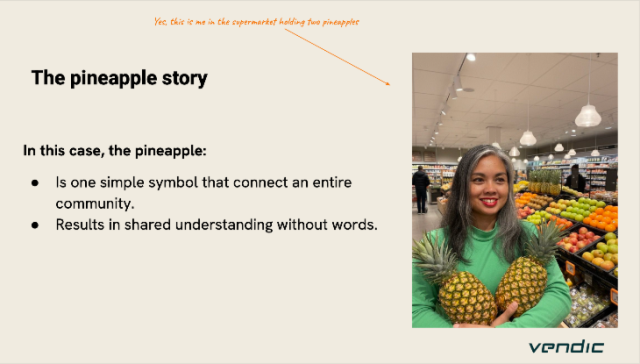
Tabitha's talk was a love letter to collaboration—and a warning against the "My Precious" mentality.
You know the reference: Gollum, the ring, isolation, downfall. Companies that hoard their knowledge, customers, and successes face the same fate. No growth. No resilience. Eventually, no business.
The alternative? Community-based partnership.
Real partnerships create value by combining strengths, sharing insights, and inspiring each other. Collaboration doesn't just build brands—it creates markets.
How to start small:
The foundations: Collaborate on shared goals, focus on knowledge sharing, build trust through mutual support, and co-create innovative solutions and events.
Tabitha's message was clear: treat your business as "Our Treasure," not "My Precious." Share knowledge, experiment together, work towards common goals. That's where lasting impact lives.
The common thread
If there's one theme connecting all six talks, it's this: isolation, manual processes, and hoarding don't scale. Growth comes from centralising what matters (PIM), optimising what's broken (returns, costs, warehouses), persevering through the mess (The Golden Twins), and collaborating instead of competing (partnerships).
The merchants and agencies winning today aren't the ones with the biggest budgets or the flashiest tech. They're the ones who've built the right infrastructure, culture, and partnerships—and who aren't afraid to share what they've learned.
That's the real gold.
Meet Magento Netherlands 2025 reminded us why community events matter. Thanks to Mage-OS Netherlands for organising a brilliant day.